How to strengthen your community anchor organisation
SCDC supports communities to think about the things that matter to them and form local organisations to collectively improve people’s lives. These are often known as community anchor organisations.
This resource is designed to help you consider how your doing in terms of representing the local community and getting the things they need to happen done. It will help identify anything you might want to improve using our checklist that can be used by committees or boards, or by individual office bearers in organisations to stock of progress and identify action for future development.
What are Community Anchor Organisations and Networks?
They are trusted, community-led groups, or networks of groups that represent local people and act as a central point for bringing community voices, priorities, and resources together to improve their area. They could be locally elected Community Associations, Community Councils, Community Development Trusts or other types of network which includes these types of organisations.
In plain language, a community anchor organisation:
Is rooted in the community and led by local people
Brings together voices, ideas, and action
Can represent the community in discussions with councils, services, and funders
Helps turn community needs and ambitions into plans, projects, and partnerships
Works to make sure public services and their decisions reflect local priorities
CAOs will often explore issues by involving local people in discussions about needs and priorities for local community action and what services are delivering. It is now common for communities to express their needs and aspirations by developing a local community action plan or Local place plan to set agenda locally and provide a framework of doing practical things that meet the needs of communities.
Why we need strong community anchors
Place based working - Your voice, your place
Having strong community voices in how communities are regenerated and public services planned, delivered and evaluated is also an essential part of Place-based working in Scotland’s communities. This is an approach to making peoples lives better by focusing on the specific needs and circumstances of a particular area—rather than applying a one size fits all national solution. This should mean organisations collaborate locally e.g. councils, health services, police, charities, with community groups to design and deliver services around a place and its people. Place based work should have:
A Local focus: Decisions shaped by the social, economic, and environmental context of a community (e.g., rural or urban, deprivation levels, population needs).
An emphasis on Partnership working: Public services, third sector organisations, and residents work together, sharing resources and knowledge instead of operating separately.
Meaningful Community involvement: Local people are actively involved in decision-making, not just consulted. Their lived experience helps shape priorities and more control of local resources.
Is about prevention and early intervention: Efforts are aimed at preventing problems before they escalate (e.g., tackling poverty, health inequalities, or crime. This is because this is better for people – but also cheaper in the long run.
Government have tried to promote the ide of Place based working by promoting The Place Principle with all public services in Scotland. This was agreed by Scottish Government and its partners in Scotland’s councils, the NHS and other public services.
The principle requires that all those responsible for providing services and looking after assets in a place need to work and plan together, and with local communities, to improve the lives of people, support inclusive and sustainable economic growth and create more successful places.
Strengthening local democracy
Running alongside developments in place making, the Scottish Government, CoSLA and other partners are changing the way that local decision about your community could work as part of the Local Governance Review. SCDC has also been involved in this work alongside Scottish Community Alliance, the Development Trust Association and groups representing Disabled people and Ethnic Minorities.
This work builds on our existing representative democracy in local government, where people elect others to make decisions on their behalf, by strengthening participatory democracy, where people directly take part in more decision-making about the places they live and have more control over services and resources. Achieving this needs clear and reliable ways for local people to speak to each other about the issues that matter and take collective decisions to effectively influence those currently making decisions about policy and services.
Making sure everyone is heard
When you’re making the case for greater community control or influence over what services do and how they do it, its important to demonstrate how you connect with people living locally.
Diversity in communities, is sometimes reflected in different kinds of community groups for young people, older peoples groups or those working on different issues, like housing or mental health issues. Others will represent people whose voices are even less heard in decision making like disabled people, young parents or refugee groups.
If you are thinking about producing your own action plan, then you are probably already in a community anchor organization like a Community Council, a community development trust or a network of local organisations like these and others working together. But we know that representing everyone is hard and doing it well requires time, resources and trying things out. It might also need some trusted advice from people whose role it is to support minorities such as disabled people, or refugees living locally. You might also need specialist resources for your community engagement such as British Sign Language or or language interpreters, or funding to provide childcare ensure that parents locally can get involved when they want to.
Inclusive engagement isn’t about forcing everyone living locally to express opinions or tick boxes saying they have been involved in your plan. But it is about working to make sure that everyone who wants to, no matter what barriers they have, have the chance to express their experiences and needs and get involved in local solutions.
Assess your community anchor organisation
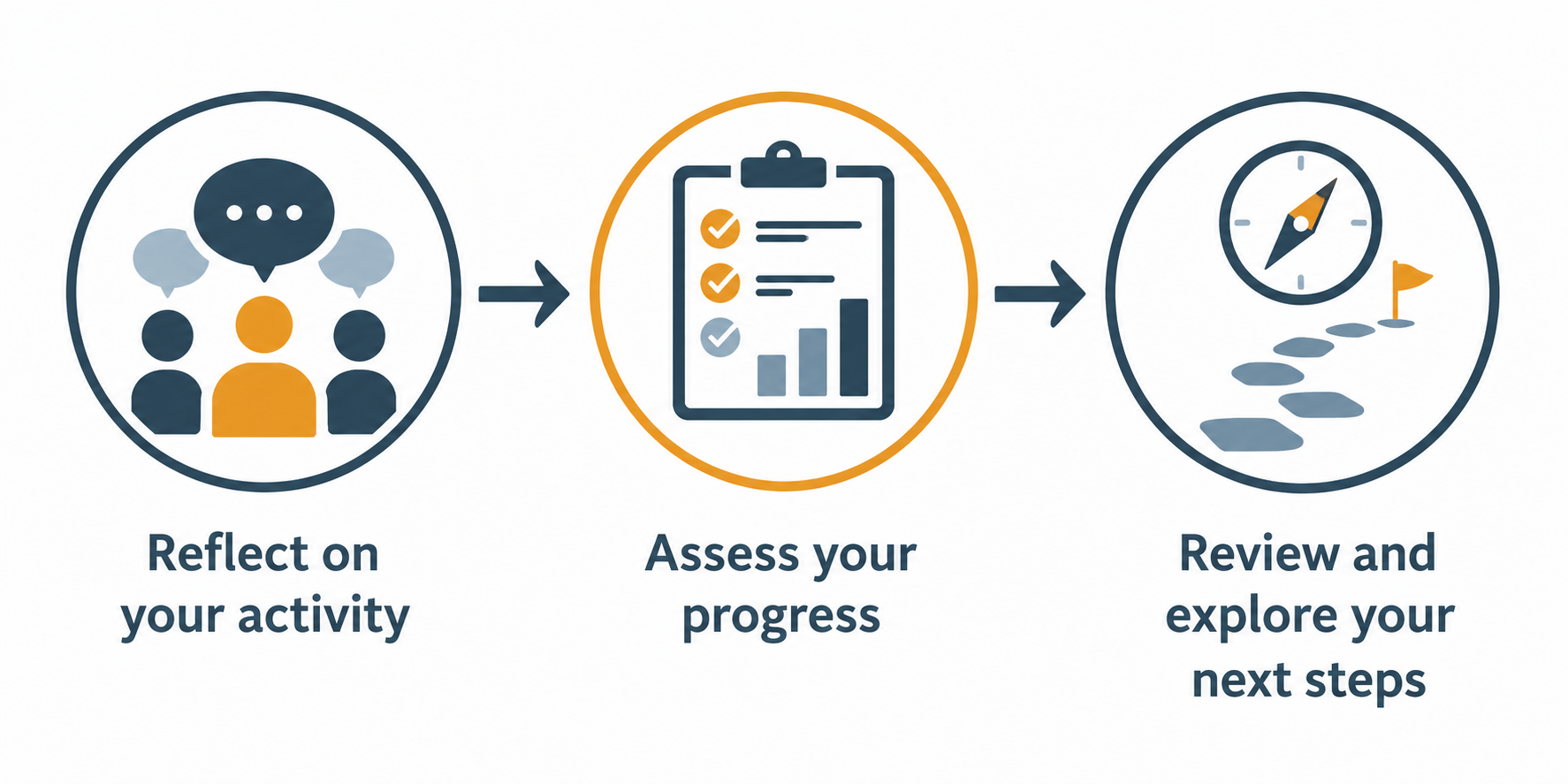
Task 1: Assessing our strengths and challenges
It’s now time to review where you feel your community anchor organisation is around the strengths and challenges of the activity you deliver.
To do this, we have developed a tool that will help you score different aspects of your work, and then review those scores and see in what areas you’re doing well, and where improvements could be made.
For each statement, select a score and add comments if helpful. Rating Scale:
1 = Not at all
2 = A little
3 = Somewhat
4 = Mostly
5 = Fully
Once complete, export your results to Word or PDF for use later. You can also use the ‘Import results’ button to continue where you’ve left off.

Task 2: Getting access to the support you need
Scotland has increasingly committed to increasing power to community organisations and this is intensifying in the latest Route Map on local community led decision making published by the Scottish Government in March 2026. But whenever community led organisations discuss their desire for more powers at community level with us they usually raise the need for more support for volunteers involved in the process.
So, helping you think about the priorities for your support needs is an important part of assessing the strengths of your community anchor group/network.
How far you want to go depends on what levels of responsibility that you are keen to take on. You could be:
Providing a local forum to raise and resolve issues with politicians and service providers
Campaigning on important local issues
Carrying out some form of community led planning to shape what services do in your place
Seek more detailed involvement in shaping how services are delivered locally
Working to improve, protect or adapt aspects of the local environment
Helping to target funds and other resources effectively to your community
Initiating and delivering community led projects that create projects and services run by the community
Supporting local social enterprises to create income, jobs etc
While many of these tasks can be effectively delivered by volunteer or community activist roles, addressing others will require greater access to knowledge, skills and reliable commitment of time. This might involve a mixture of seeking funding to employ core staff and create local employment; resources to bring in specialists to help with things from time to time and training and mentoring develop the knowledge and skills of your board, committee or volunteers.
Below is a list of support areas which we have already heard groups say are important to their work. We suggest that assessing the extent to which you can access this support is a useful part of your self assessment of your organisation as a whole. It could help with:
Identifying things you need to strengthen in order to achieve your aims
Shaping requests to support agencies for the help you need
Shaping bids for independent funding to develop your organisation
The statements relate to categories of support. Please the following rating Scale:
1 = We need significantly more support
2 = We need some support
3 = We need a little support
4 = We are mostly confident in doing this ourselves
5 = We are fully confident / no support needed
Once complete, export your results to Word or PDF for use later. You can also use the ‘Import results’ button to continue where you’ve left off.